

INTRODUCTION
Ask ten people how they budget, and you’ll get ten different answers.
Some wing it entirely, checking balances occasionally and hoping for the best. Others track every penny down to the last cent, assigning missions to each dollar like a general commanding troops.
Between these extremes lie two of the most popular budgeting methods in personal finance:
The 50/30/20 Rule and Zero-Based Budgeting.
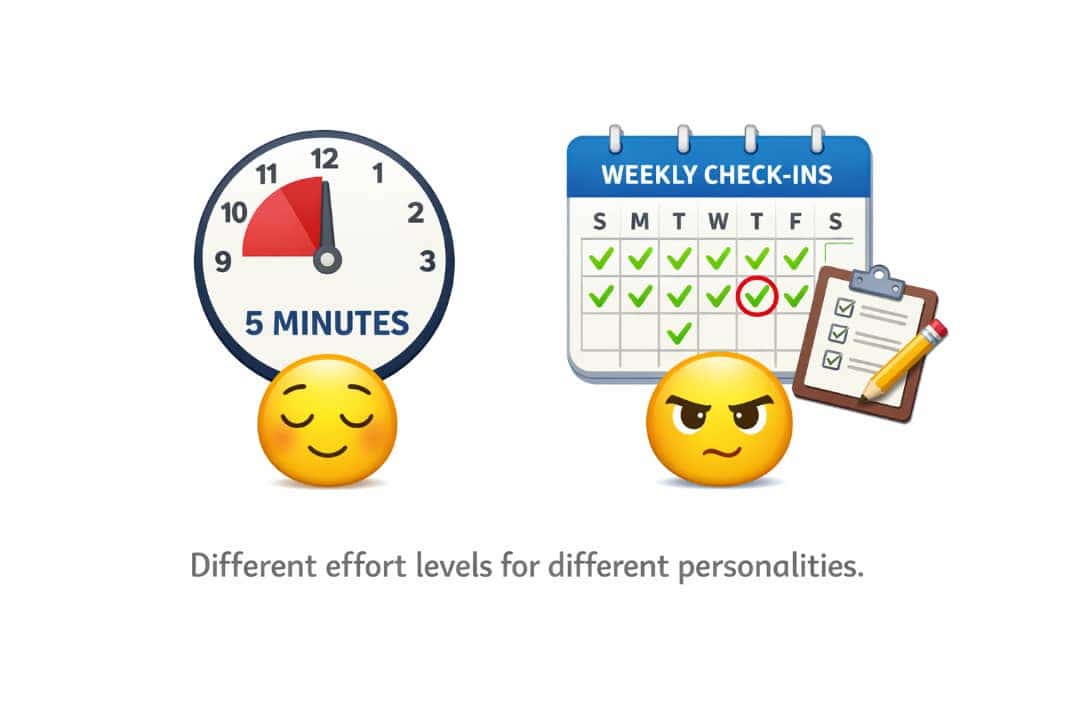
One takes five minutes to set up and runs on autopilot. The other requires monthly meetings with your money and leaves nothing to chance.
Both work. Both have passionate advocates. But they serve different people in different seasons.
Let’s break down exactly how each works and help you decide which fits your life right now.
WHAT IS THE 50/30/20 RULE?
The 50/30/20 Rule was popularized by Senator Elizabeth Warren in her book All Your Worth: The Ultimate Lifetime Money Plan.
It’s beautifully simple:
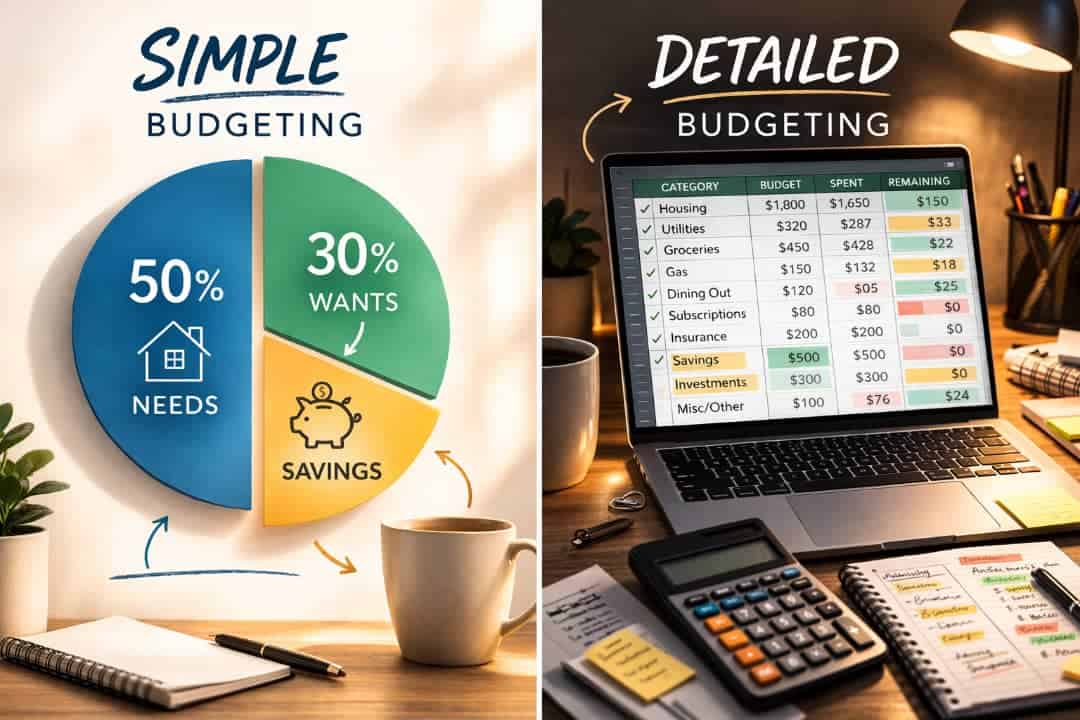
- 50% of your after-tax income goes to NEEDS
- 30% of your after-tax income goes to WANTS
- 20% of your after-tax income goes to SAVINGS
Needs are non-negotiables: rent or mortgage, utilities, groceries, minimum debt payments, transportation to work, and insurance.
Wants are everything else: dining out, streaming subscriptions, concerts, hobbies, upgraded phone plans, and that third pair of sneakers.
Savings includes debt payoff beyond minimums, retirement contributions, emergency fund building, investments, and major purchase savings.
You calculate your monthly after-tax income, multiply it by 0.5, 0.3, and 0.2, and those become your spending limits. Stay within the buckets, and you’re financially healthy.
WHAT IS ZERO-BASED BUDGETING?
Zero-Based Budgeting (sometimes called “every dollar budgeting”) takes a different approach:
Income minus Expenses = ZERO
Before the month begins, you assign every single dollar of your expected income to a specific category. Every bill. Every savings contribution. Every investment. Every dollar of fun money.
By the time you’re done, your income minus all assigned expenses equals exactly zero. Not a dollar unaccounted for.
This method was popularized by Dave Ramsey and his “Every Dollar” app. The philosophy: If you don’t tell your money where to go, you’ll wonder where it went.
Zero-based budgeting requires more work upfront. You need to know your categories, estimate accurately, and track throughout the month to ensure you stay on target.
But the control is unmatched.
8 KEY DIFFERENCES BETWEEN 50/30/20 AND ZERO-BASED BUDGETING
1. EFFORT AND MAINTENANCE
50/30/20: Low effort. Calculate your income once. Set up automatic transfers for savings. Check in occasionally to ensure you’re roughly on track. Most months, you barely think about it.
Zero-Based: High effort. Monthly planning sessions. Ongoing tracking. Categorizing every transaction. Reconciliation at month-end. It’s a relationship with your money that requires regular attention.
2. PSYCHOLOGICAL EXPERIENCE
50/30/20: Freedom within boundaries. The 30% “wants” bucket gives you permission to spend without guilt. Buy the coffee. See the movie. Order takeout. No need to track every transaction as long as you stay in the bucket.
Zero-Based: Control and intensity. Every purchase is pre-approved or requires adjustment elsewhere. Some find this empowering. Others find it suffocating. Your personality determines which camp you’re in.
3. FLEXIBILITY WITH IRREGULAR INCOME
50/30/20: Adapts beautifully to variable income. Freelancers and commission-based earners can base their budget on average income or lowest-month income. The percentage structure automatically scales with fluctuations.
Zero-Based: Challenging with variable income. You need to know what you’ll earn to assign dollars. Solutions exist (a budget based on last month’s income or building a buffer), but they require more planning and adjustment.
4. DEBT PAYOFF ACCELERATION
50/30/20: Debt minimums go in “needs.” Extra debt payments come from the 20% “savings” bucket. Works fine for steady progress. But it lacks the intensity some need for serious debt elimination.
Zero-Based: Ideal for debt snowball or avalanche. You can pour every available dollar beyond minimums into debt each month. Nothing escapes. Every dollar not spent on necessities attacks what you owe.
5. SPENDING LEAK DETECTION
50/30/20: You’ll know if you overspend the buckets overall. But you won’t know which specific habits are draining you. The $40 monthly on apps you never use? Invisible within the “wants” bucket.
Zero-Based: Merciless exposure. When you assign every dollar, you see exactly where money goes. That forgotten subscription? You have to consciously assign money to it or cancel it. Awareness alone saves most people hundreds monthly.
6. AUTOMATION POTENTIAL
50/30/20: Highly automatable. Set direct deposits to split between accounts. Auto-pay needs. Auto-transfer savings. Auto-pay is wanted from a separate account. The system runs itself.
Zero-Based: Less automatable. The monthly assignment process requires active decisions. You can automate once categories are set, but the review and adjustment process remains manual.
7. LEARNING CURVE
50/30/20: Anyone can do this. No spreadsheets required. No category creation. No tracking apps necessary. It’s budgeting for people who hate budgeting.
Zero-Based: Steeper learning curve. You need to understand your spending patterns, create meaningful categories, estimate accurately, and track consistently. Most people fail their first month or two.
8. LONG-TERM SUSTAINABILITY
50/30/20: Highly sustainable. Years later, you’re still following the same simple formula. It doesn’t require ongoing willpower or attention.
Zero-Based: Can lead to burnout. The intensity required month after month, year after year, wears some people down. Many switch to simpler methods after achieving their initial goals.
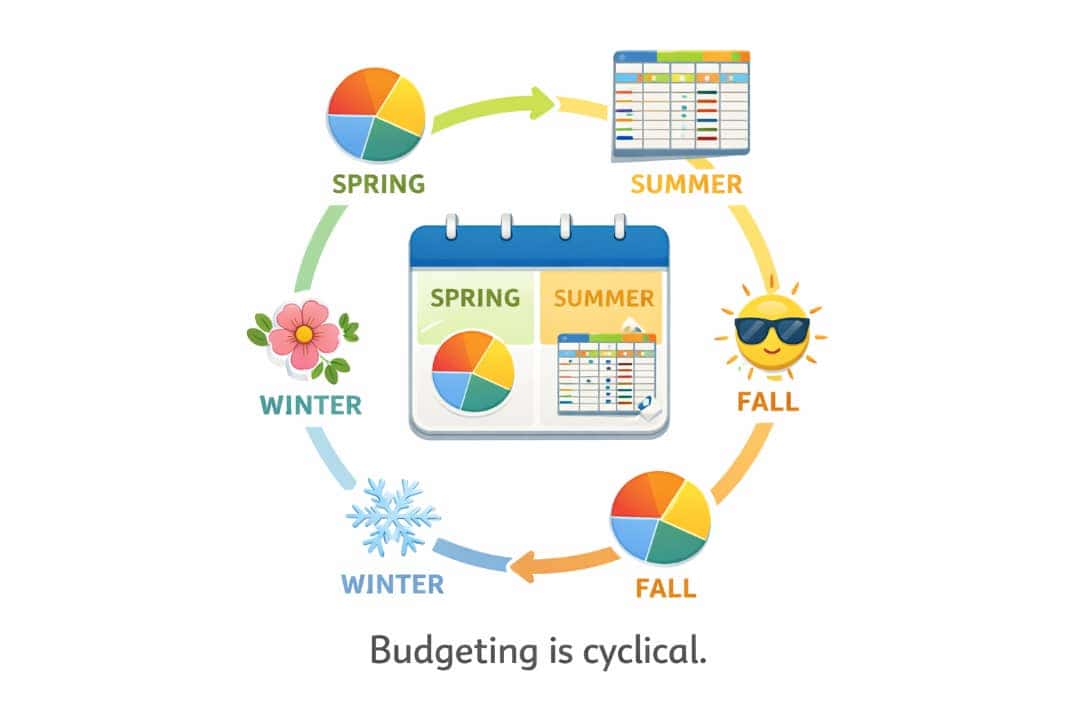
THE IDEAL STRATEGY: USING BOTH IN DIFFERENT SEASONS
Here’s the truth that personal finance gurus don’t emphasize:
You don’t have to choose one forever.
Different seasons of life call for different tools.
Season 1: Building the Habit
Start with 50/30/20. It’s forgiving. It’s simple. It builds the fundamental habit of living within your means without overwhelming you. Do this for 3-6 months until the percentages feel natural.
Season 2: Attacking a Goal
When you’re ready to get intense about paying off debt, saving for a house, or maxing retirement accounts, switch to zero-based budgeting for 3-6 months. Do the monthly meetings. Track every dollar. Find the leaks. Pour everything into your goal.
Season 3: Maintenance Mode
Return to 50/30/20 after achieving your goal. Keep the good habits you built. Stay aware of your leaks. But give yourself breathing room. Sustainable beats perfect.
Season 4: Quarterly Check-Ins
Even in maintenance mode, do one zero-based month every quarter. Reset your awareness. Find new leaks. Reconnect with your money. Then go back to simple.
REAL NUMBERS EXAMPLE
Meet Marcus, earning $5,000 monthly after tax:
50/30/20 Approach:
- Needs: $2,500 (rent, utilities, groceries, car payment)
- Wants: $1,500 (dining, streaming, hobbies, travel fund)
- Savings: $1,000 (401k, emergency fund, extra debt)
Marcus sets autopay and forgets. He’s financially healthy but never builds intense momentum.
Zero-Based Approach (Debt Season):
- Rent: $1,200
- Utilities: $300
- Groceries: $400
- Car payment: $350
- Insurance: $150
- Minimum debt: $200
- Dining out: $200 (assigned consciously)
- Streaming: $50
- Gas: $150
- EXTRA DEBT: $2,000 (every remaining dollar)
Marcus throws $2,000 extra at debt monthly. Debt disappears fast. But he had to assign every dollar to make it happen.
FINAL THOUGHT
The 50/30/20 rule builds sustainable habits.
Zero-based budgeting builds wealth faster.
Neither is wrong. Neither is always right.
The smartest money move isn’t choosing a side forever. It’s knowing which tool fits your current season and using it unapologetically until you need the other.
READY TO MASTER YOUR BUDGET?
VISIT wealthintelreport.com for our free Budget Toolkit. You’ll get both the simple 50/30/20 calculator AND the zero-based spreadsheet template. Use whichever fits your current season.
FOLLOW @wealth Intel on TikTok for daily money truth bombs that actually build wealth.
DISCLAIMER
This content is for educational purposes only and not financial advice. Budgeting methods should be adapted to your income, goals, and circumstances; neither approach guarantees success without consistent application. Consult a financial professional for personalized guidance. wealthintelreport.com and @wealthintel assume no liability.