

INTRODUCTION
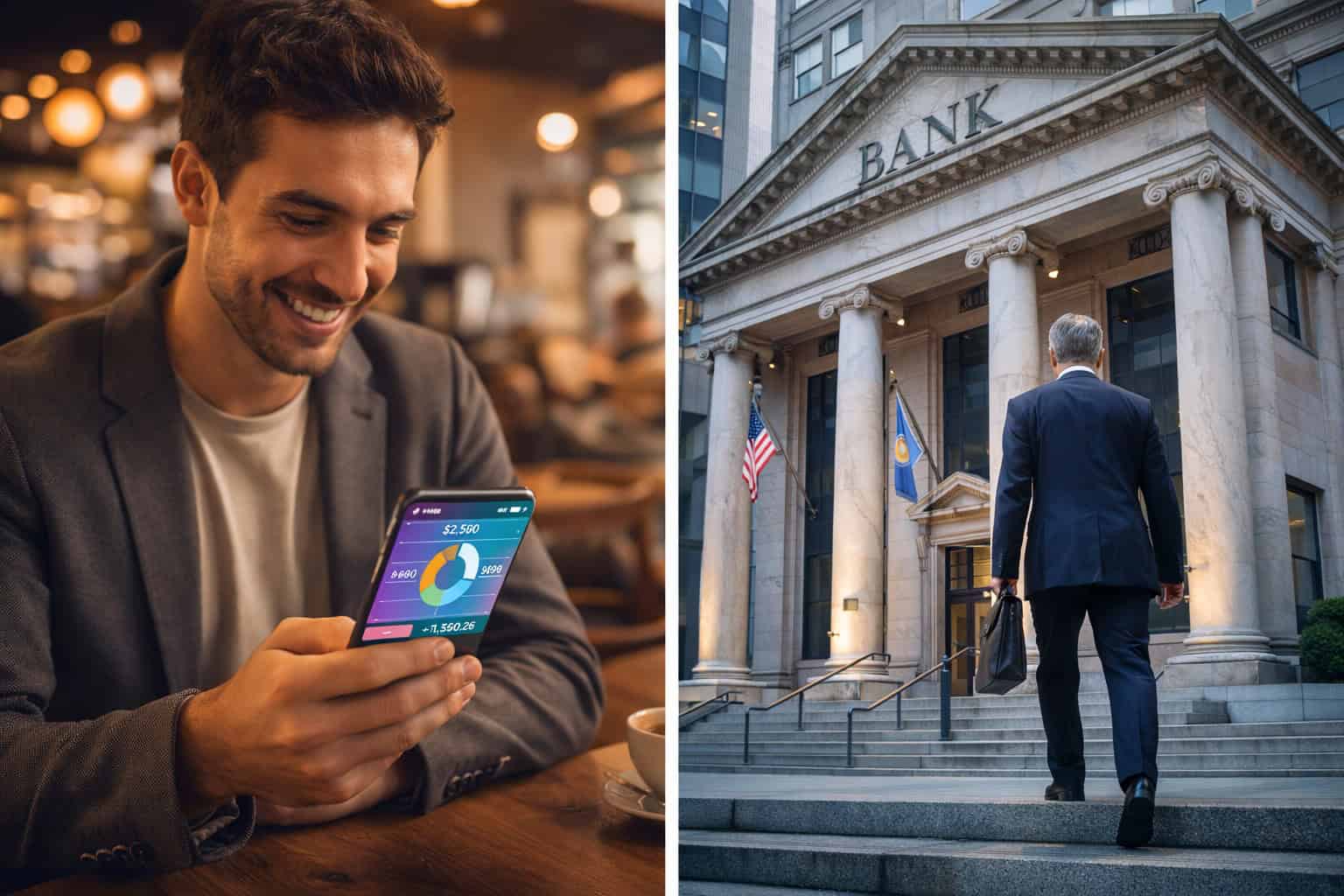
Walk down any main street in America and you’ll see them.
Bank branches. Solid buildings. Marble columns. Flags flying. Vaults somewhere underneath. They’ve stood there for decades, symbols of stability and trust.
Now look at your phone.
In that small device live dozens of financial apps—Chime, SoFi, Cash App, Venmo, and Robinhood. No buildings. No tellers. No marble. Just code, design, and the promise of making money simpler.
These two worlds are colliding.
Traditional banks have the trust, the branches, the history. FinTech companies have the technology, the user experience, and the lower fees. One represents the past. The other increasingly represents the future.
But which is actually better for your money?
Let’s break it down.
WHAT IS FINTECH?
FinTech stands for Financial Technology.
It’s not a single company but an entire category—businesses that use technology to deliver financial services more efficiently than traditional methods.
Think of apps like:
- Chime, SoFi, Current (banking)
- Robinhood, Webull (investing)
- Venmo, Cash App, Zelle (payments)
- Betterment, Wealthfront (robo-advising)
These companies have no physical branches. They operate entirely through your smartphone. They build their technology from scratch rather than layering apps over decades-old mainframe systems.
The result? Lower overhead costs, faster innovation, and user experiences designed by people who actually use smartphones.
WHAT ARE TRADITIONAL BANKS?
Traditional banks are the institutions that have dominated finance for centuries.
Names like:
- JPMorgan Chase
- Bank of America
- Wells Fargo
- Citibank
- US Bank
They operate physical branches where you can walk in, speak to a teller, deposit cash, open accounts, and get face-to-face advice. They’ve been around for decades (or centuries). They hold most of America’s deposits.
But they also run on legacy technology. Their core banking systems often date to the 1980s or 1990s. Adding new features takes months or years. Their business model historically relied on fees and paying minimal interest on deposits.
8 KEY DIFFERENCES BETWEEN FINTECH AND TRADITIONAL BANKS
1. FEE STRUCTURE
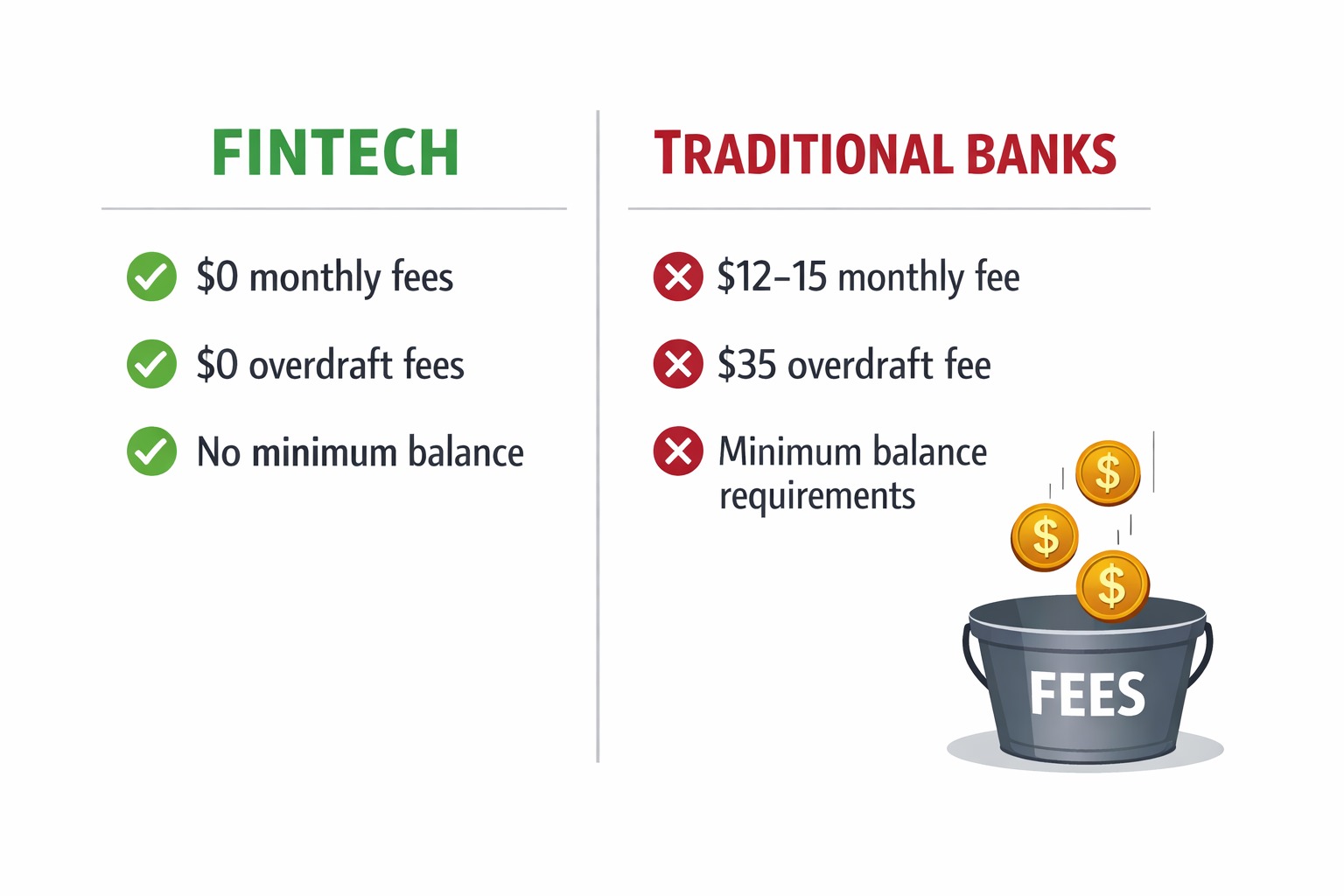
FinTech: Most FinTech apps charge zero monthly fees. No minimum balance requirements. There are either no overdraft fees or very limited ones. They make money through interchange fees when you use their card, premium subscription tiers, and lending products.
Traditional Banks: Fee revenue is massive. In 2023, traditional banks collected over $12.5 billion in overdraft fees alone. Add monthly maintenance fees ($10-15), ATM fees, wire transfer fees, and foreign transaction fees, and the costs add up quickly.
2. INTEREST RATES ON SAVINGS
FinTech: High-yield savings accounts from FinTech companies currently offer 4-5% APY. They pass on the higher rates because they have lower overhead and want to attract deposits.
Traditional Banks: The big banks pay 0.01% APY on standard savings accounts. If you find a special offer, the rate may drop to 0.05%. On $10,000, that’s $1 per year versus $400-500 per year with FinTech.
3. USER EXPERIENCE AND DESIGN
FinTech: Built by designers and developers who grew up with smartphones. Apps are intuitive, beautiful, and updated constantly. Features like spending categorization, savings goals, and push notifications come standard.
Traditional Banks: Banking apps exist, but they often feel clunky. They’re bolted onto legacy systems. Features are limited. Updates are slow. The user experience feels like an afterthought.
4. PHYSICAL PRESENCE
FinTech: Zero branches. Everything happens in the app. Need to deposit cash? Some FinTech apps partner with retail stores (Walgreens and 7-Eleven) for cash deposits, but it’s not as seamless as walking into your local branch.
Traditional Banks: Thousands of branches. Need a cashier’s check today? Walk in. Have a complex issue? Talk to a human. Do you need to deposit $5,000 in cash? Done in minutes. Physical presence matters for certain needs.
5. SPEED OF INNOVATION
FinTech: New features roll out weekly. Early direct deposit (getting paid up to 2 days early). Automated savings round-ups. Investment integration. Crypto trading. If it’s new, FinTech probably offers it first.
Traditional Banks: Innovation moves at glacial speed. Adding a new feature requires regulatory approval, legacy system integration, and months of testing. By the time traditional banks offer something, FinTech has already moved on to the next thing.
6. CUSTOMER SERVICE
FinTech: Primarily digital. Chatbots, email support, occasional phone lines. Some FinTech companies offer excellent support, but you can’t walk in and talk to someone. If you’re the type who needs hand-holding, this matters.
Traditional Banks: You can literally walk in and speak to a person. For older customers, those with complex needs, or situations where digital support isn’t enough, this is invaluable. There’s something reassuring about a human looking you in the eye.
7. ACCESS TO CREDIT
FinTech: Many FinTech lenders use alternative data to evaluate creditworthiness, cash flow, education, and job history, not just credit scores. This creates opportunities for individuals whom traditional banks might overlook.
Traditional Banks: Strict credit score requirements. Established underwriting criteria. If you meet the requirements, you will receive favorable rates. If you’re outside it, you may struggle regardless of your ability to repay.
8. TRUST AND PERCEPTION
FinTech: Many are relatively new. Some people worry: “What if they go out of business?” Most FinTech banks actually partner with traditional banks for FDIC insurance, so your money is protected up to $250,000. But perception lags reality.
Traditional Banks: Centuries of history. Buildings that look solid. Names everyone recognizes. Even if they charge more and pay less, that feeling of stability has real value for many customers.
THE HYBRID FUTURE
Here’s what’s happening right now:
Traditional banks are buying FinTech companies or building their own digital offerings. Chase has its app. Bank of America has Erica (AI assistant). They’re trying to catch up.
FinTech companies are adding more traditional services. SoFi now offers loans, credit cards, investing, and insurance all in one app. The line between them blurs every year.
But for now, the smart strategy is hybrid:
- Use FinTech for everyday banking (higher savings rates, no fees, and a better app experience)
- Keep a traditional bank account for cash deposits, notary services, and situations where you need a human
- Let them compete—your money benefits when you’re willing to move it
REAL NUMBERS EXAMPLE
Meet Maria, age 30, with $15,000 in savings and a $4,000 monthly direct deposit:
All Traditional:
- Savings interest: $1.50/year (0.01% APY)
- Monthly fees: $15 (waived with minimum balance, maybe)
- Overdraft risk: $35 per incident
- App experience: Functional but basic
Hybrid Strategy:
- $15,000 in FinTech HYSA at 4.5% = $675/year interest
- Checking with FinTech: $0 fees, early payday (2 days early = $4,000 working sooner)
- Keep $500 in traditional bank for cash needs
- App experience: Modern, intuitive, constant updates
Maria earns $675 more per year just by moving savings. Zero extra effort.
FINAL THOUGHT
Traditional banks aren’t evil. They served us well for centuries.
But their business model was built for a world without smartphones, without instant payments, without apps that make banking feel like social media.
FinTech isn’t perfect. Customer support can be frustrating. Cash deposits are harder. Some apps come and go.
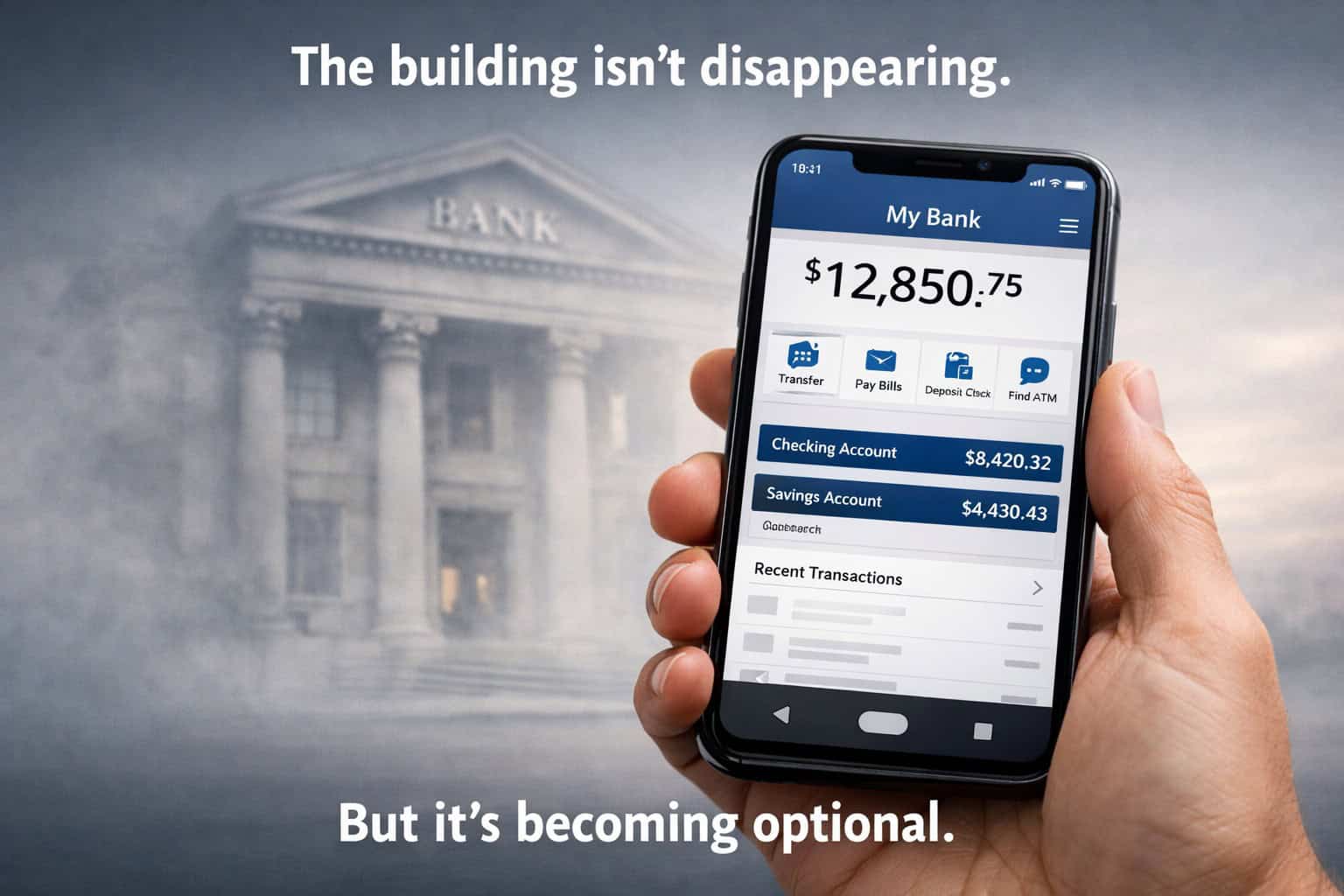
But for everyday money-saving, spending, tracking, and growing, the app on your phone now beats the building on the corner.
And that gap is only getting wider.
READY TO OPTIMIZE YOUR BANKING?
VISIT wealthintelreport.com for our free FinTech Banking Guide. We’ve vetted the top apps for safety, features, and real returns—so you can stop overpaying for banking.
FOLLOW @wealth Intel on TikTok for daily money truth bombs that actually save you money.
DISCLAIMER: This content is solely intended for educational purposes and does not constitute financial advice or product endorsements. FinTech and traditional banks each have unique risks and benefits. FDIC coverage limits apply; interest rates change. Always read terms before opening accounts. wealthintelreport.com and @wealth Intel assume no liability.