

INTRODUCTION
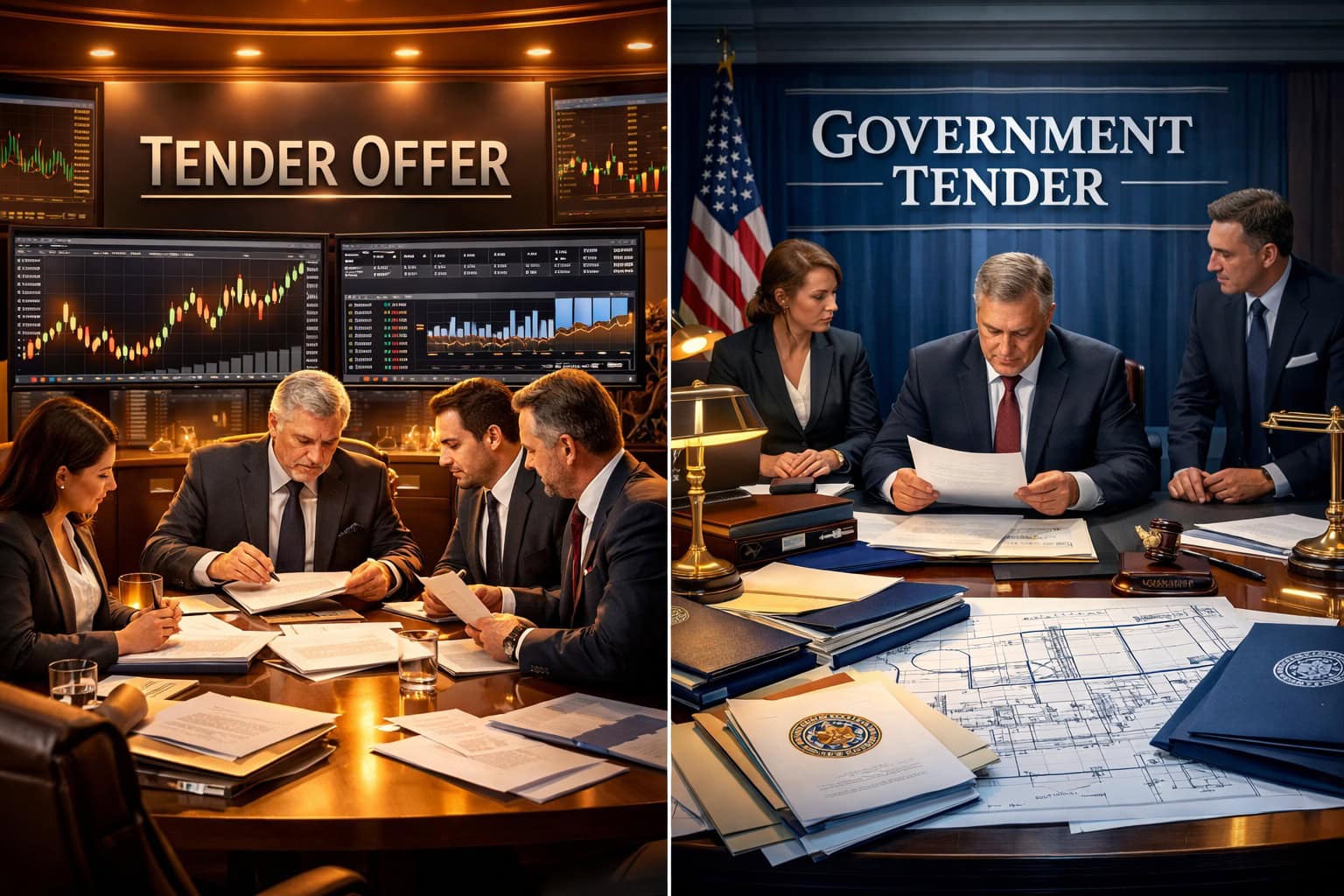
You’re reading the financial news and see, “Company X launches tender offer for Company Y.”
Then you’re browsing business opportunities and see, “Government announces tender for highway construction.”
Same word. “Tender.”
But these two concepts couldn’t be more different. One is about corporate control, battles for ownership, and shareholders cashing out at a premium. The other is about government procurement, public works, and businesses competing for contracts.
Confusing them isn’t just embarrassing; it could mean misunderstanding major market events or missing business opportunities.
Let’s break down exactly what each means and why they operate in completely separate worlds.
WHAT IS A PUBLIC TENDER OFFER? (Corporate Finance)
A public tender offer is a public, open invitation by an individual or company (the acquirer) to all shareholders of a publicly traded corporation to tender (sell) their shares at a specified price, usually at a premium above the current market price .
Key characteristics:
- Made directly to shareholders, not necessarily through management
- Offer price typically includes a premium to incentivize selling
- Often conditional on acquiring a minimum number of shares
- Subject to strict securities regulations
- Can be friendly (approved by target management) or hostile (bypassing resistant management)
The Williams Act of 1968 fundamentally changed tender offers in the United States by amending the Securities Exchange Act of 1934. It introduced crucial requirements including mandatory disclosure of the bidder’s identity and intentions, minimum offer periods, and withdrawal rights for tendering shareholders .
Common purposes:
- Corporate acquisitions and takeovers
- Gaining controlling interest in a company
- Taking a public company private
- Issuer tender offers (company buying back its own shares)
WHAT IS A GOVERNMENT TENDER? (Procurement)
A government tender is a formal, structured process where government agencies invite businesses to submit bids (offers) for contracts to provide goods, services, or construction work.
Key characteristics:
- Public money means public scrutiny and transparency requirements
- Competitive bidding process designed to ensure fairness
- Contracts awarded based on published criteria (often lowest price or best value)
- Regulated by procurement laws, not securities laws
- Covers everything from office supplies to infrastructure projects
The procurement lifecycle typically includes:
- Planning – Defining needs, market research, setting criteria
- Sourcing – Advertising opportunities, receiving offers, evaluation
- Contract management – Monitoring performance, managing variations, finalizing deliverables
Common purposes:
- Infrastructure projects (roads, bridges, public buildings)
- Government services (IT, consulting, maintenance)
- Supply of goods (equipment, vehicles, supplies)
- Public works and community projects
8 KEY DIFFERENCES BETWEEN TENDER OFFER AND GOVERNMENT TENDER
1. WHAT’S BEING BOUGHT/EXCHANGED
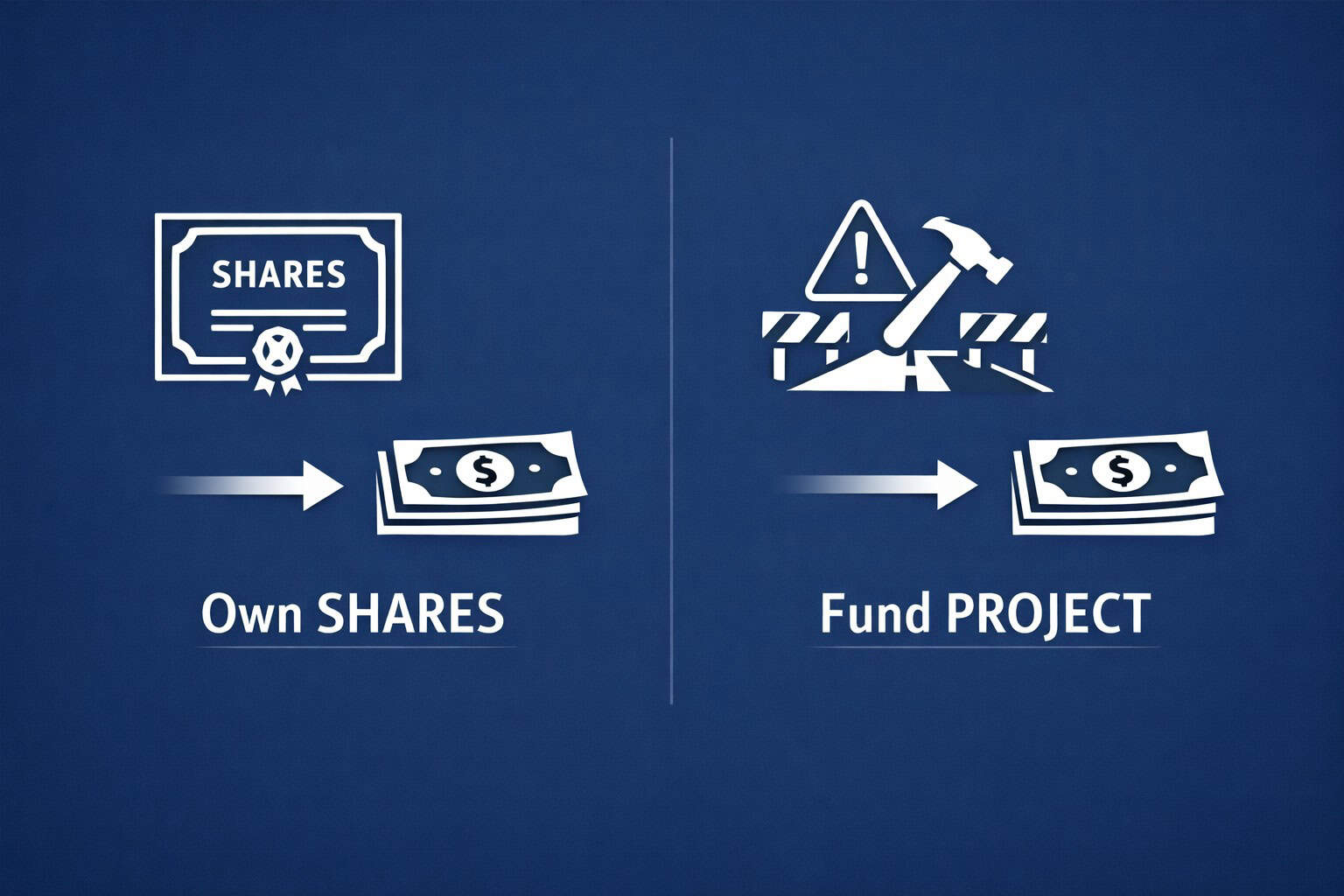
Public Tender Offer: Shares of a company. Ownership stakes. You’re buying a piece of the business itself. Shareholders exchange their ownership for cash (or sometimes other securities).
Government Tender: Goods, services, or construction. You’re buying what a business PRODUCES, not ownership of the business. A construction company builds a road but remains independent.
2. PURPOSE AND INTENT
Public Tender Offer: Usually about gaining control. The acquirer wants enough shares to influence or control the target company. Strategic moves, mergers, acquisitions, or taking companies private.
Government Tender: It’s About fulfilling public needs. The government needs something built, delivered, or serviced. They’re not trying to own the business—just buy what it produces.
3. PRICING DYNAMICS
Public Tender Offer: Premium pricing. To convince shareholders to sell, acquirers typically offer 20-50% ABOVE the current market price. The premium is the sweetener.
Government Tender: Competitive pricing. In many tenders, contracts go to the lowest qualified bidder. The goal is value for taxpayer money, not paying extra to incentivize participation.
4. REGULATORY FRAMEWORK
Public Tender Offer: Securities laws. In the US, governed by the Williams Act and enforced by the SEC. Requires Schedule TO filings, disclosure of bidder identity, offer terms, and funding sources.
Government Tender: Procurement laws. In the US, governed by the Federal Acquisition Regulation (FAR) and various state procurement codes. Different agencies, different rules, different enforcement.
5. PROCESS AND TIMELINE
Public Tender Offer: Relatively fast. Typically 20-60 days from announcement to expiration. Shareholders decide quickly. The offer has a clear deadline.
Government Tender: Can be lengthy. From planning to solicitation to evaluation to award can take months. The procurement lifecycle includes multiple stages with built-in waiting periods.
6. PARTICIPANTS AND AUDIENCE
Public Tender Offer: Target audience is SHAREHOLDERS—investors who own stock. Institutional investors, retail investors, anyone holding shares.
Government Tender: Target audience is BUSINESSES—suppliers, contractors, service providers. Companies capable of delivering the required goods or services.
7. FRIENDLY VS. HOSTILE NATURE
Public Tender Offer: Can be either. Friendly tender offers have target management’s blessing. Hostile tender offers go directly to shareholders over management’s objections. This direct-to-shareholder path is what makes hostile takeovers possible .
Government Tender: Always formal and structured. No “hostile” concept. You either meet the requirements and submit a compliant bid, or you don’t. No bypassing procurement officers.
8. HISTORICAL DEVELOPMENT
Public Tender Offer: Modern cash tender offers gained prominence in the mid-1950s. The earliest hostile cash tender offer can be traced back to 1944 . The Williams Act (1968) brought regulation to protect shareholders from coercive tactics.
Government Tender: Procurement systems have existed for centuries, but modern competitive bidding frameworks developed alongside government accountability movements. Different countries have different procurement laws, but transparency and fairness are universal themes.
REAL-WORLD EXAMPLES
Public Tender Offer Example:
In 2010, Kraft Foods launched a successful tender offer to acquire Cadbury PLC. Kraft made a public offer directly to Cadbury shareholders at a premium over the market price, ultimately gaining control of the British confectionery giant .
Government Tender Example:
The British Columbia government publishes all procurement opportunities on BC Bid. Suppliers can view opportunities, submit bids, and participate in transparent evaluation processes. Contracts are awarded based on published criteria, with debriefs available for unsuccessful bidders.
WHY THE CONFUSION MATTERS
If you’re an investor, misunderstanding a tender offer announcement could mean:
- Missing a premium opportunity to sell your shares
- Not understanding why a stock is jumping
- Failing to recognize a takeover attempt’s implications
If you’re a business owner, misunderstanding government tenders could mean:
- Missing legitimate contract opportunities
- Wasting time bidding on processes you don’t understand
- Failing to comply with procurement requirements
If you’re a student or professional, using the terms incorrectly signals you don’t understand fundamental business concepts.
THE BOTTOM LINE
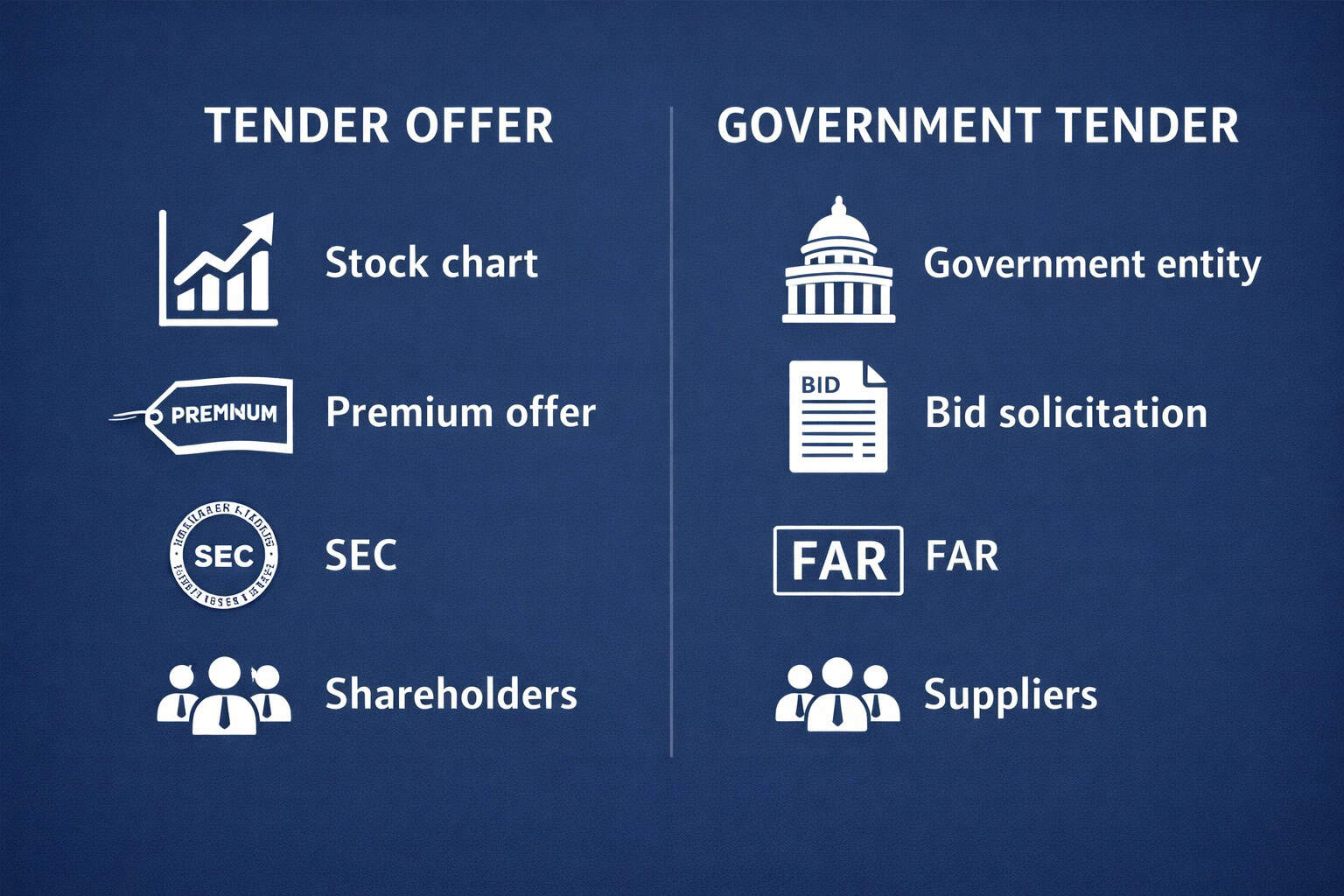
Tender offer = Corporate finance. Buying companies. Shares. Premiums. SEC. Williams Act. Shareholders.
Government tender = Procurement. Buying stuff. Services. Competitive bids. FAR. Contracting. Suppliers.
Same word. Two completely different worlds.
Know which one you’re talking about. Your audience and your understanding depends on it.
READY TO MASTER MORE FINANCE TERMS?
VISIT wealthintelreport.com for our free Finance Terms Decoder. We break down confusing terminology into simple, actionable explanations so you never mix up concepts again.
FOLLOW @wealth Intel on TikTok for daily finance truth bombs that actually build wealth.
DISCLAIMER: For educational purposes only, not financial, legal, or procurement advice. Tender offers involve securities regulations; government tenders vary by jurisdiction. Consult qualified professionals for your specific situation. wealthintelreport.com and @wealth Intel assume no liability.